Coil Heater: Types, Working, and Industrial Applications
A Coil Heater is one of the most efficient and versatile heating solutions used in modern industries. Designed for high-temperature performance and precise heat transfer, a Coil Heater is widely used in plastic processing, packaging machinery, hot runner systems, medical equipment, and various industrial heating applications. Due to its compact design and rapid heating capabilities, the Coil Heater has become an essential component in manufacturing processes that require accurate temperature control.
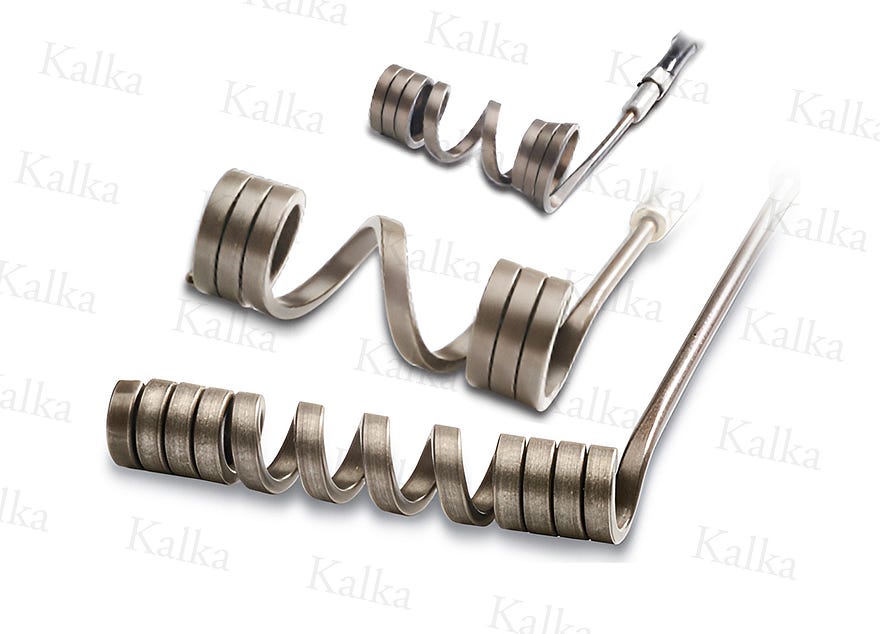
What is a Coil Heater?
A Coil Heater is an electrical heating element made using a resistance wire, typically nickel-chromium alloy, wound into a coil and insulated with magnesium oxide. The assembly is enclosed in a durable metal sheath that ensures efficient heat transfer and long service life. The primary purpose of a Coil Heater is to convert electrical energy into heat energy and deliver concentrated heating in limited spaces.
Industries prefer a Coil Heater because it offers high watt density, excellent thermal conductivity, and precise temperature management. Whether installed in nozzles, manifolds, molds, or packaging equipment, a Coil Heater provides consistent and reliable performance.
How Does a Coil Heater Work?
The working principle of a Coil Heater is based on electrical resistance heating. When electric current passes through the resistance wire, heat is generated due to the wire’s resistance. This heat is transferred through the magnesium oxide insulation and metal sheath to the target surface.
The design of a Coil Heater allows rapid heat-up times and uniform temperature distribution. This efficient heat transfer minimizes energy loss and enhances industrial productivity. Because of its compact construction, a Coil Heater can provide high temperatures even in confined spaces.
Types of Coil Heater
1. High-Density Coil Heater
A high-density Coil Heater is designed for applications requiring rapid heating and high watt density. These heaters are commonly used in hot runner systems, injection molding machines, and die heating applications.
2. Low-Density Coil Heater
A low-density Coil Heater provides controlled and stable heating. It is ideal for applications where overheating must be avoided and longer heater life is required.
3. Spiral Wound Coil Heater
This type of Coil Heater is used where space is restricted but high temperatures are needed. Its spiral design ensures efficient heat distribution.
4. Straight Coil Heater
A straight Coil Heater can be shaped according to specific industrial requirements and is often used in OEM equipment and specialized machinery.
Applications of Coil Heater
The versatility of a Coil Heater makes it suitable for a wide range of industrial applications, including:
- Plastic injection molding machines
- Hot runner systems
- Packaging equipment
- Medical devices
- Semiconductor manufacturing
- Nozzle heating
- Die and mold heating
- Food processing machinery
A Coil Heater is particularly valuable in industries where precise temperature control and fast response times are critical.
Benefits of Using a Coil Heater
Some major advantages of a Coil Heater include:
- Fast heating response
- Uniform heat distribution
- High energy efficiency
- Compact and flexible design
- Long operational life
- Easy installation
- Excellent durability
These benefits make a Coil Heater a cost-effective and dependable industrial heating solution.
Conclusion
A Coil Heater is a highly efficient heating element that delivers precise, reliable, and energy-efficient performance across numerous industrial applications. Whether you need rapid heating for hot runner systems or controlled heating for sensitive manufacturing processes, a Coil Heater provides the perfect solution. With various types, flexible configurations, and excellent heat transfer capabilities, the Coil Heater continues to play a vital role in modern industrial heating systems


Comments
Post a Comment